Showing posts with label Information security. Show all posts

Saturday, May 2, 2015

Escrow Services with Blockchain technology

Framework of Bitcoin Escrow Services


July 2017 Note: The information contained in this article is was accurate at the moment it was written. Some companies, protocols, or solutions may be outdated, replaced, or no longer supported. Please conducted additional research.

buysell.jpg
Escrow services in the bitcoin network have slightly different responsibilities than other financial escrow institutions. Traditionally, an escrow performs duties as a representative of a particular account. An escrow can pay obligations, with designated funds, allocated for the purpose of paying those debts. Escrow services are useful for dispensing funds or documents as a neutral third party in various exchanges. Escrow services do not release their contents until agreed conditions are met. Escrow services acting in the blockchain are generally not exchanging and holding funds for later payment but rather exchanging public and private keys to perform their function as an escrow.


When using bitcoin, the importance of securing your private keys can not be stressed enough. If access to a private key is lost, all funds associated with the paired wallet are lost. Funds will not be able to move into a different bitcoin wallet because when a private key associated with a wallet is lost, transactions cannot be verified. Therefore the funds are immovable. Bitcoin transactions are irreversible and there is no central system to restore funds. As a result, securing private keys is incredibly important to protecting the bitcoin associated with that key. Single point failure is more common when handling a single private key. An alternative to a single private key is to have multiple keys associated with your wallet and have those keys stored separately.

final.png


Multi-signature verification (BIP-11 & 16) is a higher tier of bitcoin wallet security that require a function, M-of-N, to validate funds. M-of-N represents the number of keys needed to verify a transaction. 2-of-3 is the most common security measure for multi-signature bitcoin wallets and is more secure than a single private key. BIP-32 is the framework for creating multi-key verification . Hierarchical deterministic wallets are designed create “child” keys from their respective “parent” keys. A public parent key can create a public child key, and a private parent key can create a child private key. This system enables a parent key to be constantly used without having to compromise the location or the owner of that private key.


Creating additional administrative barriers can become a nuisance for many companies. Key security is a difficult concept for many business that have not interacted with bitcoin or are fairly new to the technology. There needs to be strict documentation, auditing policies, compliance reports, access lists and many other administrative hurdles that need to be functioning to provide an intermediate level of security. Multi-signature bitcoin wallets create the need for new escrow services that offer to securely manage private keys and authorize transactions.


Companies Offering Bitcoin Escrow Services

Third Key Solutions


Pamela Morgan, Andreas Antonopoulos, and Richard Kagan began this key management and consulting firm in late last March. As a neutral consulting firm, Third Key is merging leading industry standards with bitcoin security functions. Key creation and secure storage are the most impactful service that a bitcoin escrow firm can provide. Additional escrow services that are offered from Third Key Solutions include:


Key recovery services are a new business entity. As bitcoin use increases, more escrow services may sprout out of necessity for a higher need of secure key storage. Escrow services currently in the bitcoin realm are coordinating efforts to create a Key Recovery Network that is slated to be completed by summer 2015. This Key Recovery Network is an attempt to create industry standards in the realm of key storage and signing services. Currently this network includes Third Key Solutions, Armory, C4, and Keepr.

Private key security is one of the most important topics to comprehend when using bitcoin. Single key verification is a default security measure for many bitcoin wallet services. Multi-signature verification is not a requirement to using bitcoin but is one of the easiest ways to increase the security of your funds.


Saturday, April 25, 2015

Trustless Decentralized Connections

Mesh Networks and Monetizing Unused Bandwidth

Cantenna-peebles-small.jpg

“We are thinking, what is the future of communication.”

This is one of the key phrases that came from Google’s Fi announcement this week. Big names in western technology are now exploring a communication concept already in use in other parts of the world. Mesh Networks are a primary means of connecting communities to give internet access over a large distance in the developing world. Wireless Mesh Networks allow communication by using radio redistribution points to gain access to the internet. A user will connect between nodes to gain access to the internet. This method uses a series of routers to create a wireless network that can reach over long distances by bouncing data from one node to the other. Established mesh networks can provide fast connectivity with dedicated nodes to boost signal strength or perform routing. Mesh networks are managed in a centralized or decentralized fashion. Centralized servers can be created or the network can be self sustaining in a decentralized manner. In a more decentralized mesh network, as one node becomes unavailable, the network protocol searches for the next available node to transmit to. This is a very cost effective method for creating network infrastructure as there is no single point of failure and it is rather inexpensive to create.

The reliability of mesh networks is creating communities with internet access they could not afford or were not able to previously. Political or geographic constraints are now eliminated with the establishment of a wireless mesh network. Many developing nations do not have the resources to build large scale infrastructure projects. In South Africa, mesh networks are growing in size and are creating new advancements in the technology. A small level of technical knowledge can now give internet access to any sized community. This network lead to efficient sharing between users and created a new marketplace with a bit of ingenuity. This ingenuity is what sparked the creation of a bitcoin company in Santa Cruz with a unique solution for unused bandwidth.

BitMesh


Lp8dbeVL.png

BitMesh has recently created interest as one of the first companies to use bitcoin to sell unused bandwidth. Creating a market selling unused bandwidth reliability and security will take time, but the implications are what excites observers. While away from your home network, you could lease your unused bandwidth and receive bitcoin for acting as a node for someone purchasing your bandwidth. BitMesh has a development phase before a full public release. Security will be the most important factor when creating a decentralized network of any kind. Bitcoin is the vehicle for services like mesh networks that want to create microtransactions that could not be done with traditional forms of payment. Micropayments using bitcoin take advantage of no transfer fees and are leading to the creation of other product markets. An example is the emergence of IoT products.

Creating a safe market built from mesh networks will be challenging. Articles have been published covering the challenges with creating a monetized internet access market with bitcoin. The most common concerns were creating secure networks, protection from false nodes, and participation. Many people already have home networks and may not require additional connectivity. With the announcement of the Google Fi service this week, there is validation that there is a market for retroactive internet connectivity. Mesh networks are designed to be as dynamic as it's users wish to be. Mesh networks providing internet services will be drastically different than BitMesh's service that offers micropayments for unused bandwidth. Technology firms are only beginning to explore this new level of connectivity. These types of communities could become more common in more developed nations once the technology to create these dynamic networks becomes more readily available.

Wednesday, April 15, 2015

Properties of Bitcoin


Collecting firewood in


2.5 Billion people are without a traditional banking system. The rise of bitcoin in the last few years have started conversations about what constitutes a valid currency and how new currencies create value. Bitcoin is a useful form of money that can be exchanged regardless of the origin of the participants involved in the transaction. The characteristics of money are defined by scarcity, divisibility, portability, durability, fungibility, and recognizability. Bitcoin meets the requirements to be considered a viable form of money. As no central authority owns the bitcoin protocol, a transaction can be recorded on the blockchain that ties ownership of a good to the owner of those bitcoin. This creates a new value creation tool for goods that previously were not able to be traded outside of a regional market.


The properties of bitcoin are defined by mathematics, rather than value based on material goods or issue by a central authority. The value created by these algorithms  molds a currency that only relies on trust and the level of adoption. The adoption of bitcoin is measured by the frequency of users, merchants, or other parties exchanging the currency and the level of acceptance. An increase in the frequency of bitcoins exchanged does affect the price.


Bitcoin’s price is created by supply and demand. As demand for bitcoin fluctuates, the price will also change. When demand for bitcoin decreases, so does the price. There will only ever be 21 million bitcoins created. This creates a predictable rate of how many bitcoins will enter the market and inflation can be predicted if demand does not match the level of inflation. If the level of demand does not match the changing level of inflation, the price will fluctuate. Bitcoin’s overall market share is relatively small, and because of this small pool of currency, the price can become volatile when significant amounts of money are exchanged.

File:Hadrian Denarius.jpg


If bitcoin as a currency does not reach a high level of adoption, it can still hold value. Romans used the silver denarius as a means of exchanging currency and the coins still hold value today even though the coins are no longer in circulation. As long as there are people using bitcoin they will hold value. The usefulness of bitcoin boils down to trusting the reliability of the decentralized ledger and using bitcoins that are validated and recorded on the blockchain. Transactions being recorded on the blockchain, verified, and posted are referred to as blocks. It takes approximately ten minutes to solve, or validate, a block. There is an analogy I enjoy using from a talk Andreas Antonopoulos gave at MIT that describes the adjusting difficulty of validating a bitcoin transaction.


The analogy begins by describing a room with 50 people, each with their own Sudoku puzzle. The amount of rows and columns have been calculated to have the Sudoku solved in approximately 10 minutes. A reward is posted for the first person to solve the puzzle at 25 bitcoin. As the timer begins people have started to walk towards the front of the room to have their puzzle solution validated as correct. After 9 minutes of continuous attempts someone shares the correct solution, and is paid 25 bitcoin. The next round begins and someone solves the puzzle in 8 minutes. The puzzle is made more difficult as rounds are being solved faster than ten minutes. More rows and columns are added to the puzzle to adjust the time taken to solve the puzzle on average. After a few more rounds, a large crowd enters the room and now 500 people are attempting to solve a puzzle in 10 minutes. More rows and columns are added to the puzzle to adjust for the number of new players. The players are randomly guessing and checking their answers until the correct answer is discovered. That random element is also used in the bitcoin protocol as cryptographic nonces assign values to each transaction so it can be verified.

Test (assessment)


These basics give an overview of the technical complexity of bitcoin. Financial inclusion will increase for unbanked individuals as more consumers begin to use bitcoin and adoption increases. The ability to increase financial inclusion without the risk of fraud, laundering, or other negative financial disruption is unique feature that bitcoin offers. Economic uses of bitcoin are just the tip of the iceberg for the usefulness of the technology. Read other posts on the sidebar or an expanded look at how blockchain technology is affecting other industries.

Tuesday, April 14, 2015

Bitcoin Payment Platforms

Accepting Bitcoin as Payment
btcmerchants.png

Where to start

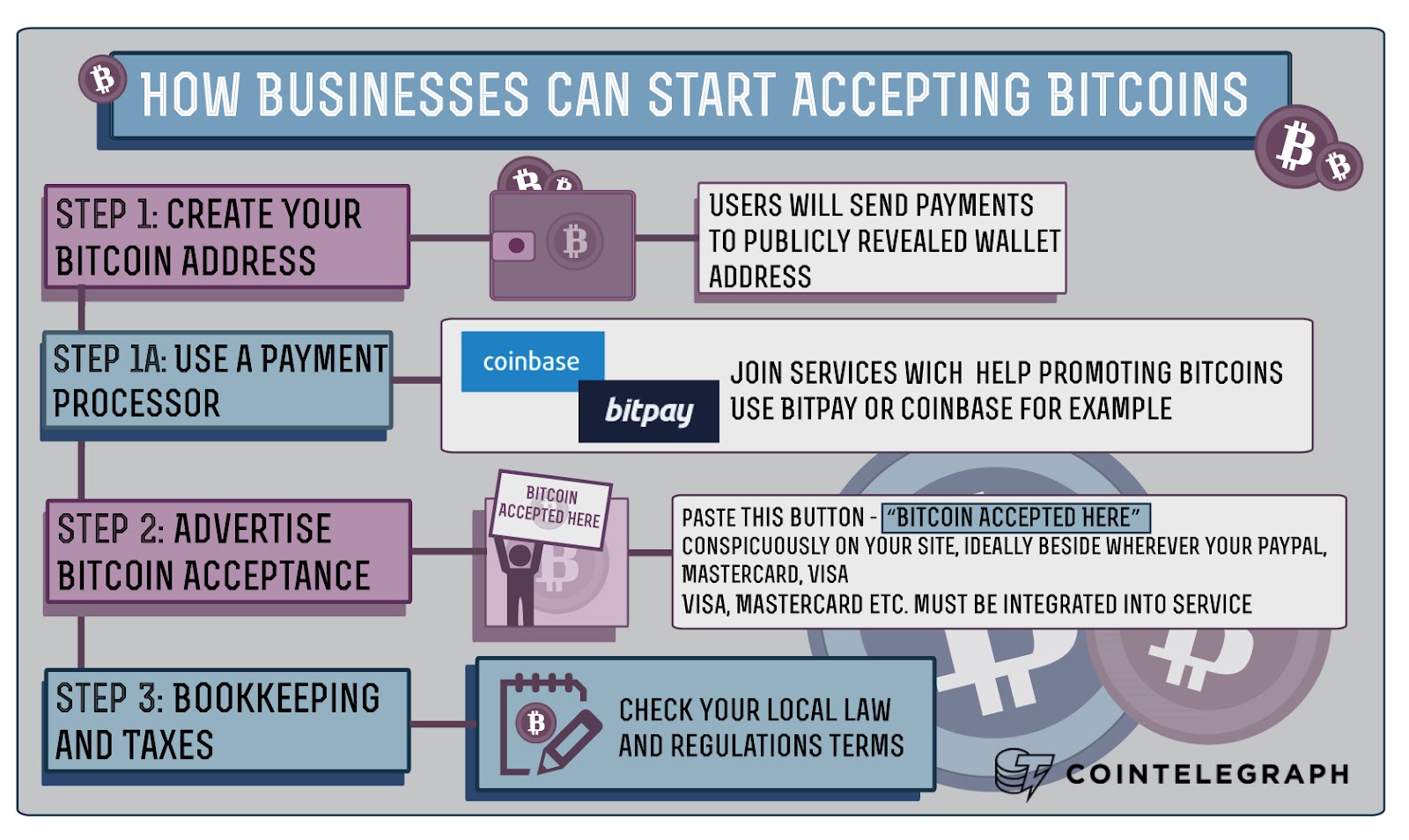
The benefits of accepting bitcoin as a form of payment is a discussion had at almost all bitcoin events. Moving away from credit card transaction fees, minimal transfer fees, and the algorithm validating the creation of bitcoin appeal to merchants or individuals that want to accept bitcoin as payment. The number of transactions that are being completed are considerably increasing each year. The complications of accepting and exchanging bitcoin however, are exasperated if a small business owner doesn't understand how to adopt bitcoin into their current payment structure. It is recommended that as you are accepting bitcoin that you advertise with a small sign declaring that you offer a bitcoin payment option.

There are a few ways to accept bitcoin. One is through a bitcoin payment system that offers support for web based payment systems. Bitcoin payment systems offer conversion options that can automatically exchange currencies from BTC to the currency of your choice. If you are paying suppliers, employees, or other merchants the business owner can set their a conversion rate based on current market price. The set price point can be calculated by looking at popular bitcoin exchanges and finding an up to date exchange rate.


A few payment processing systems have a large pool of systems with bitcoin integration. Bitcoin payment processors have grown in the last year and POS systems are beginning to adopt bitcoin with just a few setting changes. Bitpay is an active payment processor that is rapidly acquiring new partners that have adopted bitcoin integration. Using DC POS with your Bitpay account, you can enable a Vend POS system to accept Bitcoin in 7 steps. The SoftTouch POS system, mainly for restaurants, accepts Bitcoin as well. Other methods include mobile platforms that allow your customers to scan a QR code to complete a transaction. Gift cards can also be purchased with bitcoin and can be used as a substitute for the above payment processing methods if conversion is too cumbersome or the risk is too high for you to accept direct bitcoin payments.


Here is a visual infographic, from CoinTelegraph, of information I provided above:

e8f22b52cd94c8b77dd3b559d277dcde.jpg

Considerations


There are other areas of finance that do not have such clarity on how bitcoin payments are processed. Taxes, and accounting procedures have yet to create a uniform standard for bitcoin transactions. I am not qualified to give advice on these matters so I will not be giving direct guidance, but there are resources available for further research. The risks with accepting bitcoin are not unfounded either. The risk of fraud is high, and new regulations attempting to derail the increase of fraud, is making accepting bitcoin a more complicated process. The more blocks that are confirmed, the more validation those transactions have. So if you are trading in large denominations, waiting for more blocks to be verified, decreases the amount of risk you have for double spending. Be mindful for fraudulent QR codes and addresses that your customers may interact with attempting to pay you, but funds are sent elsewhere. There is no central banking system for bitcoin and if funds are sent from a customer to a malicious third party, you will not be able to recover the mispent bitcoin.

Monday, April 6, 2015

Social Media Content & Blockchain Technology

Distributing Social Media Content on Decentralized Networks


Upcoming Social Media Communities

The ability to control the content that you interact with on social media is decreasing. With each year, more tools are created to data mine your interactions to optimize advertising content.  Engagements are the driving element for advertising campaigns. Likes, Shares, Retweets, or Follows all increase engagement metrics in social media analytics. The disadvantage from using pure analytical data to target marketing campaigns is the level of attention the targeted consumer gives to each add. The level of acceptable promoted content a user will tolerate is low. New decentralized social media networks are increasing the interaction between consumer and content creator at a level accepted by the user. I previously wrote about Gem, a messaging app that pays content creation with Bitcoin. This discussion will move forward into social community creation with blockchain technology.


Synereo


Synerologo2.png

Synereo is leading the blockchain technology march into the social media domain. Synereo’s business model, for their decentralized social network, is designed around an ‘Attention Economy” measured in Amp Coin. Synereo is designing a platform that is attempting to change how your social media networks are manage mutual content sharing. Content have a set AMP value. To share content amongst other users you can pay in AMP currency set by each user. Content is already shared in social media either organically, or promoted. The disruptive opportunity that Synereo creates is rooted in organic content that everyday users contribute to social media everyday. As you share content, your submission is generating “Attention” and you are paid in AMP coin.


Advertisers purchase AMPs on an open market. To distribute advertising campaigns you pay in AMPs. Synereo takes the advertising campaign and it’s content and distributes with what is advertised as ‘intelligent content delivery’.  Users receive AMPs for their attention to the AMPlified advertising campaign. Users can spend AMPs in Synereo or exchange them for other currencies in various bitcoin exchanges. Synereo wallets will integrate multi-signature key distribution which is a recommended level of security for handling bitcoin.
Ampcoin.png

Not every user will want to migrate to Synereo from an established social media platform. Some may even find the new system of interaction cumbersome if there are too many steps to interact with other users. Non-users can be offered AMP coins, in this scenario, or other cryptocurrencies to migrate to new social media platforms. Smart contracts can be created to guarantee payout as well.


Blockchain transactions will continue to keep a record of spent coins during use of these social media networks. Say a parent or guardian wanted to monitor the amount of social media their adolescent is participating in. The users wallet can be found by the wallet address if it is known and track spent social media cryptocurrency. This is a unique parental control system that does not require an intermediary and is completely monitored by the guardian. There are unknown cause and effect scenarios that will determine the success of these new social media platforms.


Synereo In the News

Monday, March 30, 2015

Internet of Things on a Blockchain Network

The Blockchain meets Internet of Everything Technology
Internet-of-Things.jpg


The Internet of Things (IoT) is a realm of technology that has yet to find a defined market. An IoT application offers the ability for devices to communicate between devices for a specific purpose. Usually this communication is limited to a specific device set and are designed to be autonomous. The 2015 Texas Bitcoin Conference unveiled a list of new emerging decentralized IoT applications from their hackathon last Saturday.


IoT applications have yet to capture a large audience because the advantage of connected devices is difficult communicate to the average consumer. Samsung and IBM have recently collaborated together to create future IoT products using blockchain technology. This partnership will work together on IBM’s ADEPT (Autonomous Decentralized Peer-to-Peer Telemetry) concept that melds BitTorrent’s file sharing protocol, Bitcoin currency, Etherium, and peer-to-peer communication protocol Rehash. IBM has acknowledged the following hurdles with adopting IoT Technology:


  • Functional Value
  • Privacy
  • Anonymity
  • Cost effective
  • Outdated Business Models


Blockchain’s decentralized ledger brings the IoT model into a new threshold. As the device is created it can be recorded into the blockchain and referenced at any point during the life of the product. A sidechain can be created to manage Internet of Things applications. Sidechains have the ability to operate with larger blocks then the Bitcoin blockchain and even shorter transaction validation times. Sidechain transactions can still be validated on Bitcoin's blockchain through an initial block recording on the blockchain before transferring to an altcoin sidechain. This method maintains the validity of recorded transactions on the sidechain Transaction inputs are validated on sidechains through this decentralized system. When IoT transactions are confirmed, a driver can be dispatched (Uber), or a bed can be reserved (AirBnB) after the transaction is recorded.


This is unuseful to a majority of consumers. There has been adoption of the internet in everyday consumer devices such as cars in the past but have been only designed around increased sales and not usability. IBM suggests that the future of IoT could be in improving the user experience with IoT products. The car could operate with live updates about road conditions or traffic outlooks for your prefered routes. Currently, accessing services through IoT applications are made easier through “Click to Link your Social Media Profile” prompts. These easy-of-use applications make revenue through selling consumer information and IBM believes that this is not a sustainable business trend.


Another current issue for IoT adoption stems from compatibility. Devices created five to ten years ago are not guaranteed to interact with newer devices. Technology is evolving too quickly for past generation devices to continue to work for longer than a decade. Connecting devices to the internet to interact between each one another digitally removes the compatibility issues between devices. LivelyGig is one of the Texas Bitcoin Conference applications to propose a blockchain solution for IoT technology.


LivelyGig - Github
LivelyGigFigure1.png
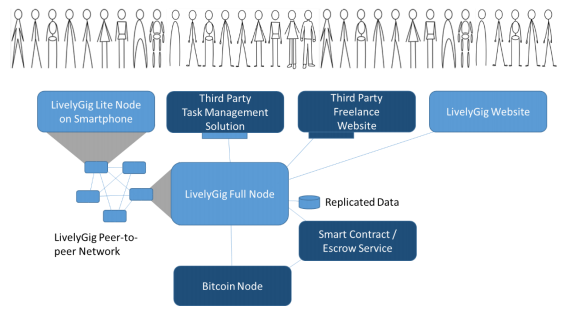
Captured from Figure 1 of LivelyGig's Whitepaper


LivelyGig is offering an IoT employment services portal to connect skilled workers to employers through smart contracts. This is a new business avenue as it removes a traditional intermediary service by connecting the contractor to the client without friction. Individual skill portals such as Assembly.com, or Freelancer.com offer pay-per-content business models, but there has yet to be a decentralized platform for these type of business exchanges. Headhunters and agencies normally pool talented freelance workers together to provide managers the skills needed for various projects. The demand however is based on the prices negotiated by the intermediary and the contracting firm. Prices can be competitive and the benchmark for services will be consensus driven. Creating decentralized job services that can be posted on a sidechain creates a usable recall list for qualified individuals with no need for an intermediary.

Full-time, part-time, freelance and micro-tasks can be tasked without friction or delay of an intermediary. If a prospective job seeker does not meet the specifications of the posted transaction on the sidechain, the transaction requirements will not be met and the contract will not be validated or initiated. LivelyGig hopes to partner with current job portal services to transform the job offering business landscape.

Imagine a mainframe that can only be maintained by a handful of individuals and they are spread out across the country. The firm or the manufacturer that is leasing the mainframe can create parameters that will be monitored for the life of the product. As the mainframe continues to run, a vital problem occurs and the mainframe experiences a critical failure. IBM will be able to create a process for when the mainframe fails, to post a specific freelance request on LivelyGig almost instantly. A qualified individual with the correct inputs can request to complete the job and ‘sign’ the contract posting and immediately depart to the site where the mainframe is located.

There is not enough reliable information about Neural or BitWave to write about those applications at this time, but a further look into similar services can give a view through the looking glass. As IoT technology moves forward, better use cases and design structures can emerge. The creation of autonomous interconnected systems can create new interactions with devices that have yet to be envisioned. Keep a close watch on emerging blockchain technology and it’s usefulness with IoT interactions.

Friday, March 20, 2015

Collecting Information on a Blockchain


Data Available on the Blockchain
File:DARPA Big Data.jpg
The price of Bitcoin is only a single gauge of the level of activity in the Bitcoin Network. At the peak of Bitcoin’s price in December of 2013, transactions peaked at an all time high of 102,000 with an average of 60,000 transactions. Today, with the price of Bitcoin below a quarter of peak value, 100,000 transactions are average. Connecting information to the level of activity in the Bitcoin Network will require further analytic data. The next resource a Bitcoin market researcher could pursue is a Blockchain Explorer.

Blockchain Explorers

Information gathering tools for blockchain inputs offer specific data that is only useable for specific use cases. There are two levels of API’s available for developers to design software applications. REST API and Webhooks API SDK. The difference between these tools is how the data is recalled. Webhooks can be created to send a notification of a specific event, such as the creation of a new block. Highlighted below are a few explorative services and data sets that can be collected from various interfaces:

Biteasy_logo.png

Biteasy has the longest reputation of block explorers on this list. Biteasy updated to version 2.0 in March with more features for developers to create applications with Biteasy’s REST API. A new feature of Biteasy is independent Input and Output values end-points that can be isolated individually.

Biteasy Endpoints:
  • Address Information
    • Multiple or single addresses
  • Block Specifics
    • Block Hashes
  • Transaction Data
    • Transaction Hashes
  • Data Inputs
    • Input Hashes
  • Data Outputs
    • Output Hashes
  • Multisig Verification
    • # of multi signatures reached
  • Search Functionality


Wd16Pwz.png

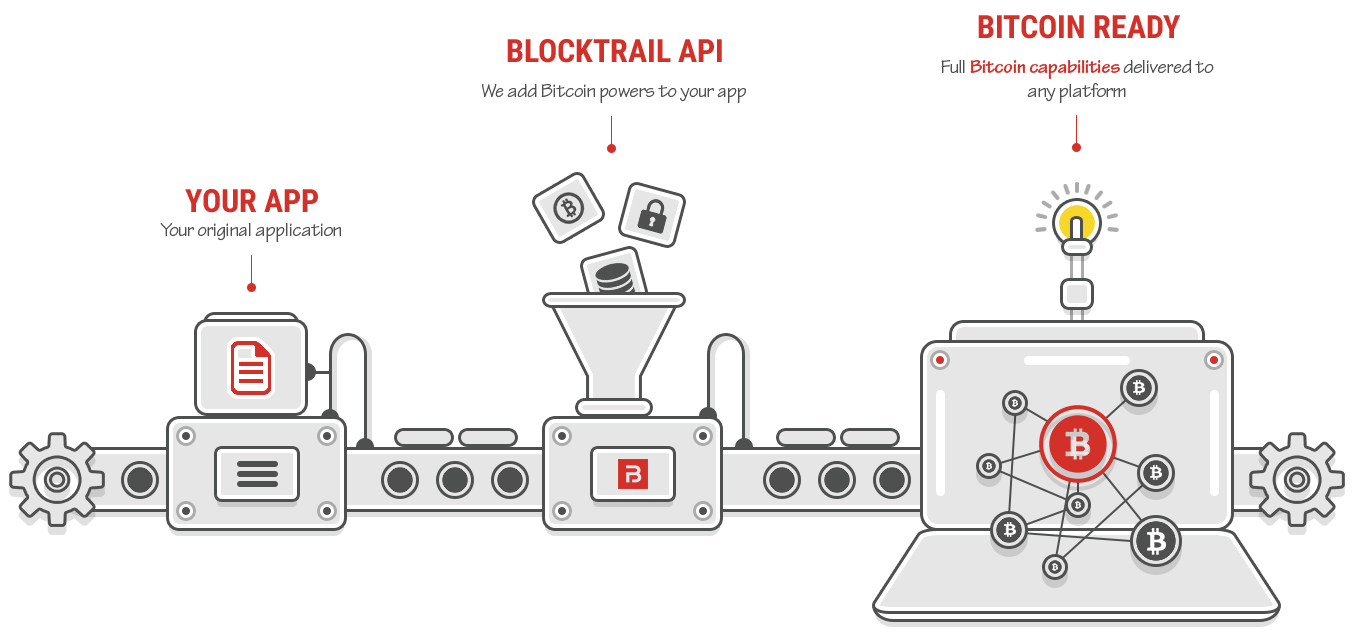
Blocktrail is a Blockchain Explorer firm offering explorer services leaning towards economic data sets. These data sets are more specific financial information and are preferred for tracking market activity or market prediction. The Blocktrail API has the ability to recall that data to user chosen platforms for further analysis.


blocktrail_bitcoin_api.png

Blocktrail Endpoints:

  • Address
    • Address Confirmed/Unconfirmed Transactions
    • Address Unspent Outputs
  • Blocks
    • Block Transactions
    • Total Blocks / Latest Block
  • Transactions
  • Verify Messages

Wallet Analytics

Tapeke (CoinDesk Article)


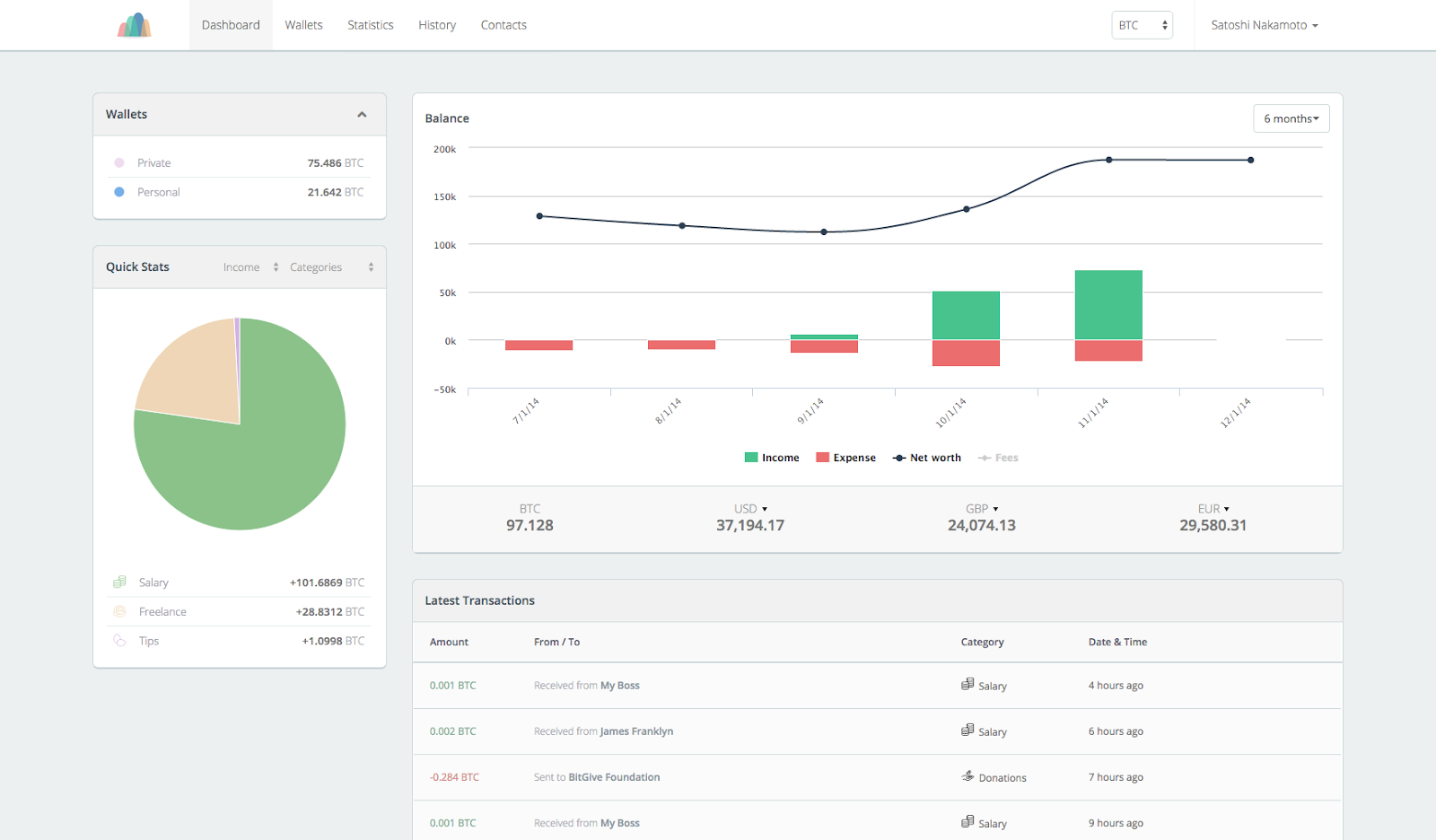
logo_medium.98ba0f5be4c1cc6a4e2d.pngTapeke is a browser Wallet Analytic tool that uses your public address to compile transaction information into a GUI. Constructed with the aid of an original Hive Wallet developer, Tapeke allows custom categories and data analytic tools for common bitcoin users. Currently this service assigns metadata to Bitcoins and Transactions of personal Bitcoin Wallets but does not have much third party support. Integration of third party support will be introduced throughout the development process, as well as a stand alone desktop app. The service was introduced in Beta Phase January of 2015.

1*A-b-X_wgPZQfh3xti-cDqg.png

Features of Tapeke:
  • Custom Categories
  • Transaction History
  • Multi-currency
  • Multiple Wallet Integration

Coyno (CNBC Article / Slideshare Presentation)


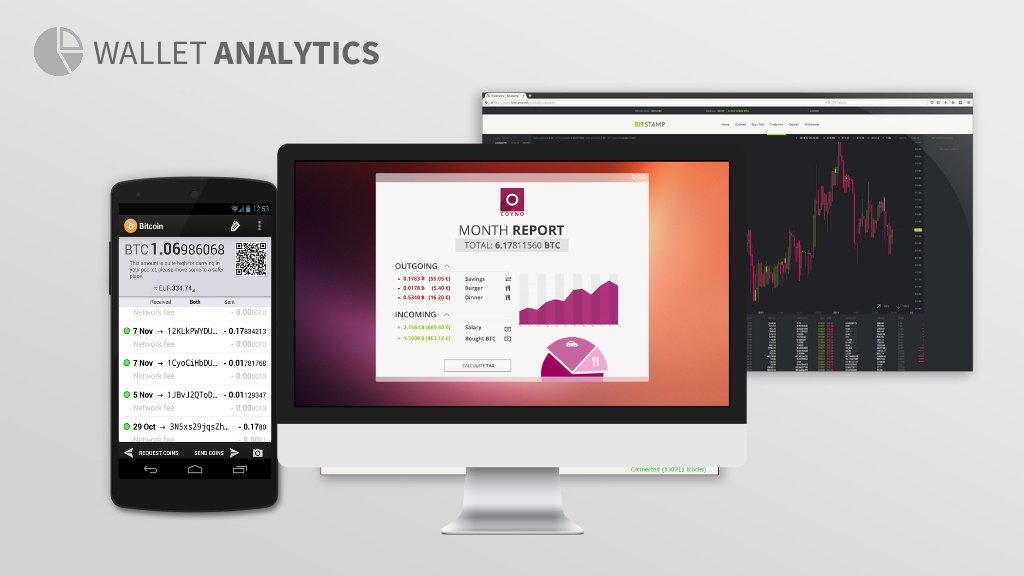
coyno-logo-v1.pngCoyno is a European Bitcoin analytic firm that grew out of a Berlin business accelerator. Business that are brought into the Alex Springer Plug and Play Accelerator receive €25,000 and mentoring from European and American partners. At the end of a three month period, companies are given the opportunity to pitch their demo to potential investors.

Coyno offers analytic tools for individual monitoring priced at ~$21 annually. Advertised as a “Bitcoin Bookkeeper with a GUI for wallet analytics”, Coyno’s business practices are directed towards monitoring only services. The small development team is adamant on reaffirming that they do not handle wallet keys and data used for account purposes are handled on Coyno databases. (Conyo uses Armory and Bitcore for extracting information).

walletanalytics.jpg